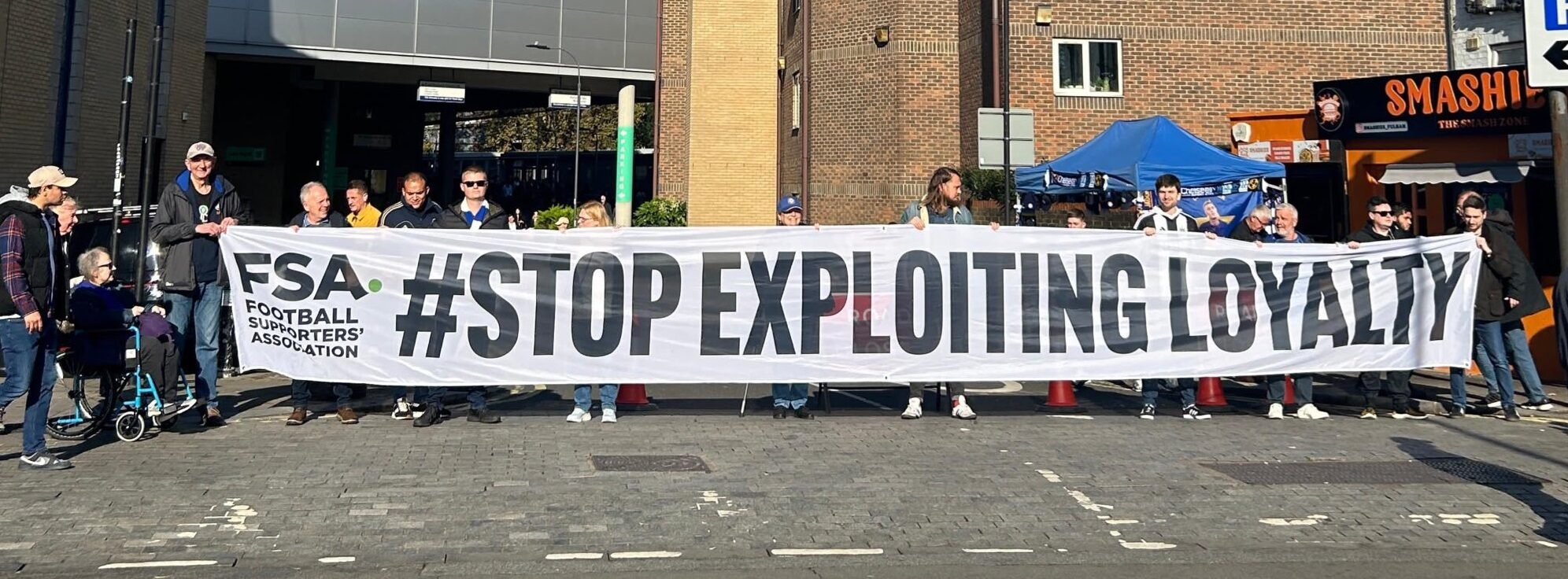

(Reposted with permission from Martin Cloake, original article https://martincloake.substack.com/p/the-fab-files-how-to-use-the-football)
The Football Governance Act gives fans the best opportunity they have had in many years to genuinely influence what goes on at the clubs they support. But, even among the more organised sections, there is little understanding of what that opportunity is, what fans’ rights are, or what is needed to maximise it.
That’s no great surprise. People aren’t attracted to football by legislative measures or corporate governance codes. But bitter experience has shown time and again that if we don’t take an interest in how our clubs are run, the things we enjoy suffer. What’s encouraging is that, at most professional clubs and a fair number of semi- and non-professional, there is at least some level of supporter organisation. But what’s worrying is that much of it is unprepared for, or even unaware of, the opportunity that has been presented.
That is not intended as a criticism of hard-working volunteers who give up their time and energy to try to provide fans with a voice. But the hard reality is we need to up our game, just as we are asking our clubs and the people who run the game to.
Over the next few weeks I am going to try to set out, in plain language, what the opportunities presented by the Bill are, and what fan organisations need to do to make the most of them. I’m also going to try to look at the challenges facing the regulator in putting the Bill’s principles into practice, and in building awareness of and confidence in the regulatory regime.
I’m not claiming to have all the answers. So this is intended as a conversation as well as information, a space where some of the challenges facing all of us who want football to be better can be worked through. My focus is going to be largely on the fan engagement parts of the Bill, but I am happy to run contributions from readers who want to take a similar approach with other aspects.
The more we can mainstream the understanding of available opportunity and what is needed to make the most of it, the more likely it is that the regulatory regime will be a success.
And the chances of success are improved by the fact that we are currently operating in fertile ground. New Prime Minister Andy Burnham has long advocated the measures set out in the Football Governance Bill. He gets football and its wider meaning, and is a former chair of Supporters Direct, the body set up to promote wider supporter involvement in and ownership of clubs. He has, in recent days, spoken out about where ownership of the game really lies, from the global level down.
Writing in 2021, he also said: “We need to legislate to give supporters more than media power.” The legislation is in place, and it has backing from the highest levels of the UK government. It’s now up to supporters to make the most of it.
In the rest of this series, I will cover points including
• Licensing – what is happening, how it will work .
• What corporate governance means, and why it is important in football.
• Heritage issues – what rights do fans have and how the Act and other legislation protects them.
• What the Regulator’s powers are and how they might be used.
Throughout the series I will, where possible, include specific references to the parts of the legislation that can help you. Here’s an introductory taster explaining why this is not just another set of fine aspirations, but a genuine opportunity to change things for the better.
The Act’s Core Purpose Includes Fans.
The Act’s definition of “sustainability” for English football requires that it “continues to serve the interests of fans”. This isn’t just a sentiment; it is a statutory purpose that the Independent Football Regulator (IFR) must advance, and it is set down in the Act’s Part 1, (3) section 1(3)(a) and 1(3)(b). The fact that these key stipulations appear so early in the Act is no accident.
The underlying aim here is to ensure that standards reached by clubs are high across the piece for everyone, regardless of who they support. Another key concept to always bear in mind is addressed via The Fan Engagement Threshold.
What is The Fan Engagement Threshold?
For a club to operate, it must demonstrate it has “adequate and effective means” to consult fans and, crucially, that it “takes the views of its fans into account” when making decisions. (Schedule 4, paragraph 4). This moves engagement from a “nice-to-have” to a mandatory condition of a club’s operating licence. (Part 3, section 18(2) sets out the detail.
Good fan engagement is not uniform and what is needed at different clubs will vary, even if there are some minimum expectations of all. The Act provides for this by allowing the Regulator to set what are called “mandatory” licence conditions for all clubs (section 20) and “discretionary” licence conditions (section 21).
All clubs will have a mandatory fan engagement condition, and meeting it will be an ongoing requirement of a club’s licence. More detail on what it will contain is set out in in Schedule 5 (paragraph 8).
So What Do Fans Get to Influence?
The Act specifies exactly what “relevant matters” clubs must consult fans on (Schedule 4, part 4).
· Strategic direction and objectives.
· Business priorities.
· Operational and match-day issues, specifically including ticket pricing.
· Club heritage, such as the home ground, crest, team colours, and name.
What Does Direct Protection of Heritage Mean?
The Act answers this question through the “heritage objective” (Part 2, section 6).
· Relocation: A club cannot move from its home ground without IFR approval, which is only granted if the club has taken reasonable steps to determine and regard the views of its fans. (Part 5, section 48).
· Crests and Colours: A club cannot make material changes to its emblem or predominant home shirt colours unless it can show the changes are supported by a majority of the club’s fans. (Part 5, section 49).
I will examine what is meant by “strategic direction and objectives” and “business priorities” in later articles.
Studying the legislative provisions described above is undoubtedly fairly dry work for the lay reader.
In drawing your attention to them however, I am seeking to make a crucial point. You will, even if you concentrate only on the fan engagement provisions described above, notice that they make regular reference to other parts of the Act, including finance and corporate governance in particular.
Again, this is no accident. The Act has been carefully designed to be holistic in nature, ensuring that different parts of it reinforce one another. Any club that seeks to view its provisions as a menu it can choose from is likely to quickly find compliance with the Regulator’s expectations is hard to achieve. As fans, remembering this key principle will help you in properly holding your own club to account.